
Shopify, for the UK
UK payment methods: cards, PayPal, open banking and Klarna
Cards and digital wallets are your baseline: 50.5% of UK card spending is online; PayPal earns its fee under £60, Klarna above £60, open banking above £150.
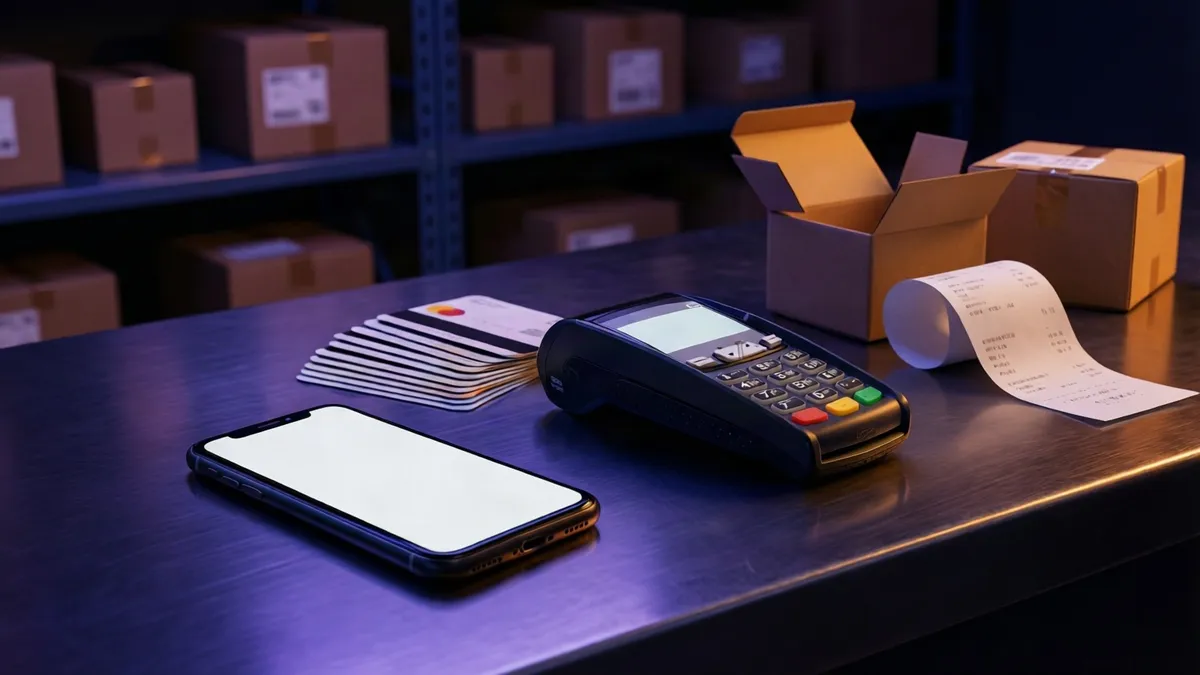
The short answer: build your checkout around cards and digital wallets first, add PayPal as a trust signal for hesitant shoppers, and treat Klarna and open banking as conditional additions rather than defaults. Klarna earns its merchant fee when your average order value is high enough to absorb it. Open banking saves on fees but adds authentication friction that can cost you the sale. The headline per-transaction rate is the wrong starting point. What matters is the all-in cost once refunds, chargebacks and shopper expectations are included. UK online card spending accounted for 50.5% of total card spending in September 2025, according to the Office for National Statistics. Cards and the wallets that sit on top of them are not optional. They are the floor.
Shopify plans, pricing and features change; always verify the current details on shopify.com before deciding.
Most people asking about UK payment methods are not shopping for a processor. They want to know which buttons to put on their checkout page, and what each one costs when a customer sends a parcel back. If you are still at the beginning, our Setting up a Shopify shop in the UK: the full guide covers the whole sequence from sign-up to first order.
The choice matters more than the fee table suggests. A method that saves you 1% per transaction but sends 5% of shoppers away is a net loss. The Baymard Institute found that the global average cart abandonment rate sits at 70.19% as of 2026, and 65% of benchmarked e-commerce sites have a mediocre or worse checkout. Every button is a conversion decision, not just a cost line.
Why the cheapest payment method is rarely the right default
The cheapest button on your checkout page is the one the shopper actually uses. Everything else is wasted code.
A 2025 Baymard Institute survey found that one in 10 US shoppers abandoned a purchase because their preferred payment method was unavailable. This was according to Shopify's 2026 analysis of payment options. That is the cost of omission. A method with a 0.5% lower fee that causes even one in twenty shoppers to leave has cost you more than it saved.
The arithmetic is blunt. If your average order is £50 and your conversion rate is 2%, every 100 visitors produce two orders and £100 of revenue. Drop conversion to 1.8% by removing a trusted button, and you lose £10 of revenue to save 50p in fees. The maths never works.
UK e-commerce revenue is expected to exceed £141 billion by 2029, according to Stripe's 2026 UK payments guide. The market is large enough that payment friction at the margin translates into real money. Your job is not to find the cheapest method. It is to find the cheapest stack that does not lose you a sale.
Cards and digital wallets: the baseline every checkout needs
Cards are not a choice. They are the floor.
Online card spending accounted for 50.5% of total UK card spending in September 2025, up from 43.7% in September 2019, according to the Office for National Statistics. Compared with 2019, the average UK cardholder makes 35% more online transactions and 20% more face-to-face transactions. Cards are where British shopping happens. Your checkout has to accept them before anything else matters.
That means Visa and Mastercard at minimum. American Express sits as a smaller premium tier, accepted by most processors but carrying a higher interchange fee. You do not need to chase it on day one.
Digital wallets sit on top of cards. Apple Pay and Google Pay are not separate payment rails. They are a faster way to present card details, using biometric authentication instead of manual entry. The card fee is the same. The friction is lower. According to Adyen, tokenised wallets satisfy requirements with a thumbprint or face scan instead of a 3D Secure redirect. This applies since Strong Customer Authentication became mandatory for UK online card payments under the Payment Services Regulations 2017.
The average e-commerce site has 32 unique checkout improvements available. Better checkout UX can gain a 35% increase in conversion rate, according to the Baymard Institute's analysis of 344 top-grossing US and EU sites. Wallet autofill is one of the highest-impact of those improvements. Apple Pay is among the widely used digital wallets in the UK. Google Pay covers the Android share. Together they remove the typing that loses mobile shoppers.
Shopify's own accelerated checkout, Shop Pay, can boost conversions by up to 50% compared with guest checkout, according to the company's 2026 payment methods guide. If you are using Shopify Payments in the UK, Shop Pay is included at no extra cost.
Heads up: this guide uses Shopify affiliate links. Sign up through one and we are paid a commission, and you pay exactly the same as you would otherwise. You can check current plan pricing at https://www.shopify.com/uk/pricing.
PayPal: a trust signal with a fee attached
PayPal is not a cheaper processor. It is a trust signal with a fee attached.
A shopper who has never heard of your shop has heard of PayPal. The brand carries weight with hesitant buyers, particularly on first purchases from unfamiliar sites. Adding the PayPal button gives those shoppers a familiar path to complete the order.
The trade-off is cost. PayPal's typical UK merchant rate tends to be higher than what most card processors charge on a standard transaction. The exact figure depends on your sales volume and negotiated rate, and PayPal does not publish a single public price. The point is that PayPal is more expensive per transaction than cards, not less.
Where PayPal earns its fee is on smaller baskets where trust is the barrier. Below roughly £60, a hesitant shopper is more likely to convert with a familiar button than without one. Above that threshold, the fee starts to eat into margin without adding much. The shopper spending £150 has already decided to trust you.
PayPal also carries its own dispute resolution process. A customer can raise a claim through PayPal rather than through your card processor, and PayPal decides the outcome. This is separate from the chargeback rights the customer has with their card issuer. You can end up fighting on two fronts.
Put PayPal second to the card and wallet buttons, not first. If you are working through what Shopify is and how it works in the UK, the payment stack is one of the first configuration decisions after the theme.
Klarna: justify it with your average order value
BNPL is not a universal checkout feature. It is a margin decision.
BNPL providers charge businesses between 2% and 8% of the purchase price, according to Shopify's 2026 payment methods guide. Where you sit in that range depends on the provider, the product category, and your negotiated terms. Klarna is a widely recognized BNPL provider in the UK, but the fee it charges you is the number that matters, not its brand recognition.
The case for Klarna rests on basket size. BNPL tends to lift average order value because shoppers spread the cost. A 5% Klarna fee represents a specific cost relative to your average order value. If Klarna increases the basket size, the additional spend at a higher gross margin contributes more to profit. The fee pays for itself.
The maths flips at low margins. If your gross margin is 20% and your AOV is £25, a 5% fee takes a significant portion of your margin. That is a quarter of your profit on a single order. Klarna only earns its place when both AOV and margin can absorb the fee.
There are regulatory caveats. The Financial Conduct Authority regulates BNPL in the UK, and the government has been bringing BNPL products under tighter consumer credit regulation. Klarna's "Pay in 3" and "Pay in 30 days" products are currently regulated. The broader BNPL market is still awaiting full regulation. Your obligations as a merchant include clear pricing display and compliance with consumer credit rules where applicable.
Refunds work through your Shopify admin. You process the return, and Klarna cancels the customer's payment plan. If you refund before Klarna has collected the first instalment, the customer pays nothing. If you refund mid-plan, Klarna cancels remaining instalments and refunds what has been collected. You do not chase the customer. Klarna does.
Add Klarna when your AOV is above £60 and your margin can absorb a 2 to 8% fee. Below that, the fee is a drag. If you are deciding which Shopify plan to choose for a UK shop, the plan does not gate Klarna. It is available as a third-party payment provider on various plans.
Open banking: cheap per transaction, costly in friction
Open banking is the cheapest rail. It is also the newest.
Pay by Bank lets a customer authorise a payment directly from their bank account through their banking app. There is no card network in the middle, which means no interchange fee. The merchant cost is typically a flat fee of a few pence per transaction rather than a percentage. Paying a flat 15p fee instead of a 2% plus 25p charge can result in savings on a £200 order.
The saving is real. The friction is also real. The shopper selects Pay by Bank, chooses their bank, is redirected to their banking app, authenticates, and confirms. Each step is a point where the shopper can abandon. Open banking also lacks a reversal mechanism. You cannot chargeback a bank transfer. Refunds have to be processed manually, which is fine for you but means the customer loses the card's dispute protection.
Bank transfers and Faster Payments are already common for UK peer-to-peer and business payments, according to the ONS data on card spending and digital trade. Open banking brings that rail to the checkout button. Whether UK shoppers trust it enough to use it as a main checkout option is still an open question. Adoption is growing but is not yet at the level of cards or wallets.
Pay by Bank earns its place on high-value or repeat checkouts. Above £150, the fee saving is large enough to justify the extra friction. For a £20 order, the saving is pennies and the friction can cost you the sale. If you are a sole trader or limited company, the fee saving is the same either way. The decision is about your customers, not your business structure.
Refunds, chargebacks and failed payments: where costs hide
The fee you pay per transaction is the visible cost. The cost that quietly eats your margin is post-sale.
Card chargebacks are the biggest risk. A customer disputes a transaction with their card issuer, and the issuer reverses the payment. You get a chargeback fee, on top of losing the sale. If you win the dispute, you keep the money but still pay the fee. Card schemes have a reason code for every scenario, from fraud to non-delivery.
According to PayPal, disputes run through PayPal's own resolution centre. The customer opens a case, you respond with evidence, and PayPal decides. The process is faster than a card chargeback but the outcome is in PayPal's hands. If PayPal rules against you, the funds are reversed from your PayPal balance.
Klarna reversals work through the same admin refund flow. You process the return, Klarna cancels the payment plan. There is no separate chargeback fee from Klarna, but a high dispute rate can get your account restricted. Klarna also bears the credit risk. If the customer does not pay their instalments, Klarna absorbs the loss, not you. That is part of what the 2 to 8% fee buys.
Open banking lacks a chargeback mechanism. A bank transfer cannot be reversed by the sender's bank. This is an advantage for you as a merchant and a disadvantage for the shopper, who loses the card's consumer protection. Refunds are manual: you initiate a Faster Payments transfer back to the customer's account.
Cross-border refunds add FX risk. In 2024, 59.6% of all online spend abroad by UK cardholders went to merchants in the Republic of Ireland, the United States and the rest of Europe. This is according to the ONS. The exchange rate may have moved between the sale and the refund, and you can lose money on the round trip. If you need to account for VAT on refunded orders, our VAT on a Shopify shop: a UK guide explains how refunds affect your VAT return.
The UK payment methods stack that fits your average order value
The thesis of this guide is that average order value should decide your payment stack, not the headline fee. Here is what that looks like in practice.
| Method | Typical merchant fee | Checkout friction | Refund route | Best AOV | Our call |
|---|---|---|---|---|---|
| Cards (Visa, Mastercard) | 1.5 to 2.5% + 20 to 30p* | Moderate | Card refund via admin | Any | Baseline |
| Apple Pay / Google Pay | Same card fee* | Low (biometric) | Card refund via admin | Any | Baseline |
| PayPal | Higher than cards† | Low (one-tap) | PayPal dispute | Under £60 | Add for trust |
| Klarna | 2 to 8% of price‡ | Low to moderate | Klarna reversal | Above £60 | Conditional |
| Pay by Bank | Flat fee, few pence§ | Moderate to high | Manual transfer | Above £150 | Conditional |
*Editorial judgment based on typical UK card acquiring rates, 6 August 2026. †PayPal's UK rate varies by volume; check PayPal's pricing page for current figures. ‡Shopify Inc., 2026. §Editorial judgment based on typical UK open banking pricing, 6 August 2026.
Our take: cards and digital wallets are non-negotiable on every UK shop regardless of AOV. PayPal is worth its higher fee as a trust signal when baskets are small and shoppers are new to you. Klarna only earns its place when your AOV and margin can absorb a fee that can reach 8% of the purchase price. We would not add it to a shop with thin margins. Pay by Bank is the cheapest rail per transaction. However, the friction only pays for itself on baskets above £150. This also requires shoppers to trust bank-app authentication enough to complete the payment.
Here is a suggested decision checklist you can copy and fill in:
Payment stack decision checklist
- What is your average order value? £. - What is your gross margin? %. - Can you absorb a 2 to 8% fee on BNPL? Yes / No. - Is your AOV above £150? If yes, Pay by Bank may save enough to justify the friction. - Are your customers first-time or repeat? First-time shoppers benefit from PayPal's trust signal. - Do you sell cross-border? If yes, factor in FX refund risk. - Have you enabled Shop Pay? It is included with Shopify Payments at no extra cost.
The Baymard Institute's checkout research is based on extensive usability testing and quantitative studies. This research found that the average e-commerce site can gain a 35% increase in conversion rate from better checkout UX. Your payment stack is part of that UX. The way Shopify works for a UK shop owner means most of these methods are a settings toggle, not a development project.
Frequently asked questions
Is open banking worth it for a small UK shop?
Only if your average order value is above £150. Below that, the fee saving over cards is pennies and the extra authentication steps can cost you the sale. Open banking suits high-value or repeat checkouts where the shopper already trusts the bank-app flow and the flat fee beats a percentage-based card charge.
Should I offer Klarna on my Shopify shop?
Add Klarna when your AOV is above £60 and your gross margin can absorb a fee of 2 to 8% of the purchase price. Below that threshold, the fee eats too much of a thin margin. Klarna lifts basket size for some categories, but measure the lift against the fee before committing.
How do refunds work with PayPal, Klarna and open banking?
PayPal refunds go through PayPal's resolution centre or your admin, and PayPal decides disputes independently of the card schemes. Klarna refunds are processed in your Shopify admin and Klarna cancels the customer's payment plan. Open banking has no reversal mechanism, so you refund manually via a bank transfer back to the customer's account.
Which UK payment method is cheapest once chargebacks are included?
Open banking is cheapest per transaction because it bypasses card networks entirely, with no interchange and no chargeback mechanism. But cheapest per transaction is not cheapest overall. If the added friction loses you a sale, the cost of that lost sale is higher than any fee saving. Cards remain the best value because they are what shoppers expect and use.
Do UK shoppers trust Pay by Bank enough to use it?
Adoption is growing but open banking is not yet at the level of cards or wallets. The ONS data shows bank transfers are common for peer-to-peer and business payments, but checkout-button adoption is a newer behaviour. Trust is higher among shoppers who already use their banking app for everyday payments and lower among less digitally engaged shoppers.
Sources
- Stripe, Inc., "Payments in the United Kingdom: An in-depth guide". https://stripe.com/resources/more/payments-in-the-united-kingdom-an-in-depth-guide — checked on 26 August 2026.
- Office for National Statistics, "Consumer card spending, e-commerce and digital trade insights in the UK: 2019 to 2025". https://www.ons.gov.uk/economy/nationalaccounts/balanceofpayments/articles/consumercardspendingecommerceanddigitaltradeinsightsintheuk/2019to2025 — checked on 26 August 2026.
- Shopify Inc., "Payment Methods: 11 Types and How to Accept Each (2026)". https://www.shopify.com/nz/blog/payment-options — checked on 26 August 2026.
- Baymard Institute, "Cart & Checkout Usability Research". https://baymard.com/research/checkout-usability — checked on 26 August 2026.
- Adyen, "Understanding Strong Customer Authentication & PSD2". https://www.adyen.com/knowledge-hub/psd2-understanding-strong-customer-authentication — 2026-08-26.
- PayPal, "How do I open a dispute with a seller?". https://www.paypal.com/us/cshelp/article/how-do-i-open-a-dispute-with-a-seller-help160 — 2026-08-26.